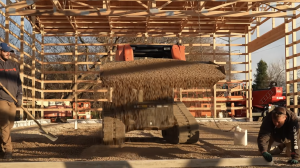
This article is Part 1 of our three-part Garage Workshop Case Study with RR Buildings, following a real-world Heat-Sheet® radiant slab installation from prep to pour.
If you missed our introductory post on the performance benefits of Heat-Sheet® in radiant slabs, read it here.
The Project Context
Every high-performance radiant slab starts beneath the surface. For this build — a working shop that mirrors the needs of garages and agricultural barns — the RR Buildings team used Heat-Sheet® Heavy, a rigid, radiant-ready insulation panel engineered for strength, precision, and efficiency.
This project comes from RR Buildings, led by Kyle Stumpenhorst — known for elevating post-frame construction through precision, craftsmanship, and innovation.
The goal: create a radiant-heated slab that can handle real-world abuse — vehicles, equipment, and temperature swings. Those same priorities apply whether you’re finishing a high-end hobby garage, a commercial workshop, or a livestock barn — the slab has to perform, season after season.
The Challenge
Conventional foam boards can crack or shift when driven over during a pour, especially in large, open spaces. Inconsistent subgrades and flexing panels lead to uneven concrete thickness and variable heat performance — two issues that compromise both durability and radiant efficiency.
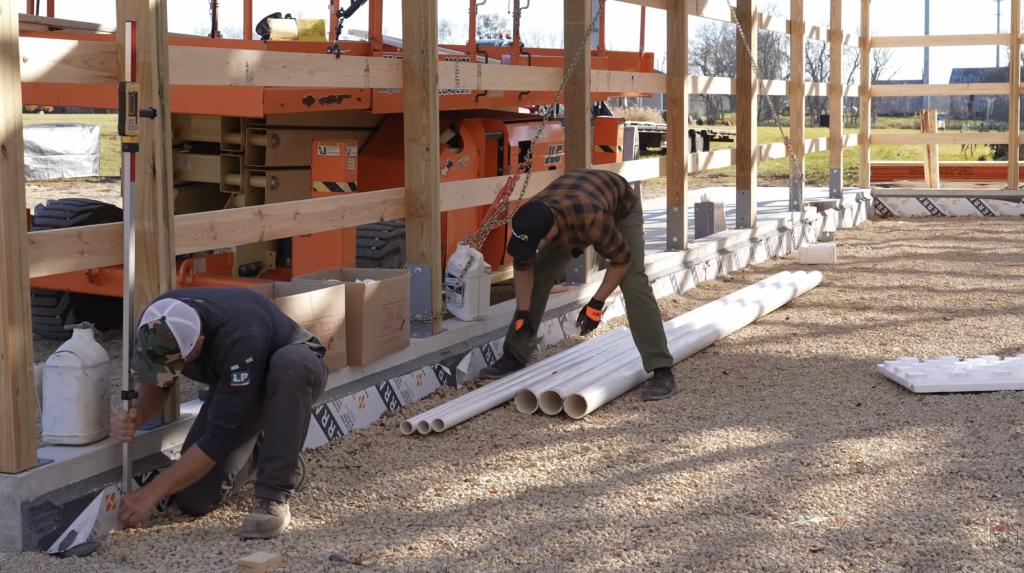
Laser-level accuracy ensures a perfectly even base for the Heat-Sheet® Heavy install.
The Heat-Sheet® Solution
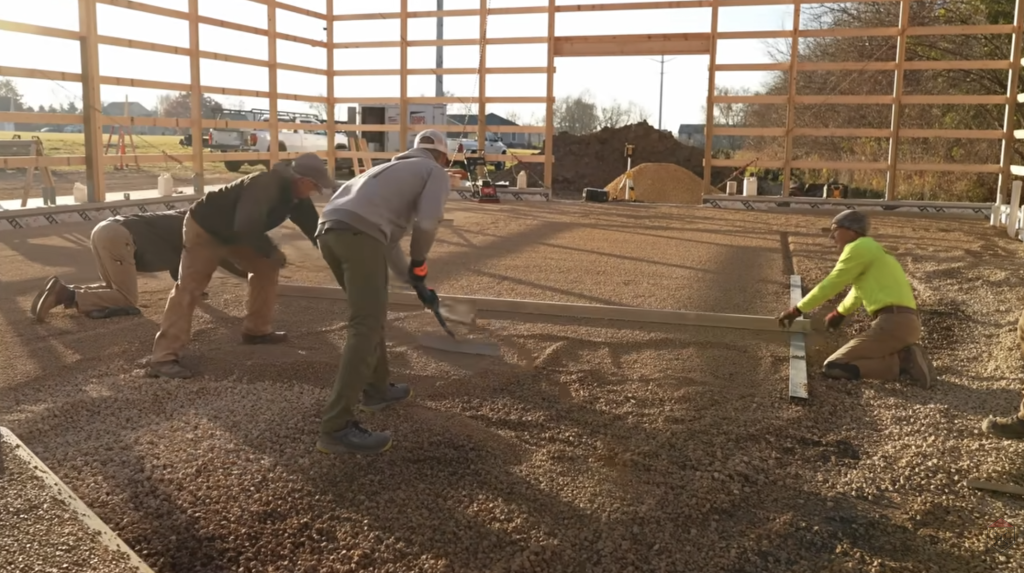
Using a laser-set gravel base and lightweight aluminum rails, the RR Buildings crew achieved a subgrade so flat it looked machine-finished. Onto that surface, Heat-Sheet® Heavy panels interlocked cleanly and stayed rigid — no flexing, no gaps, no tape.
Lightweight aluminum rails guided the gravel grading, helping the team achieve a dead-flat surface ready for Heat-Sheet® panels.
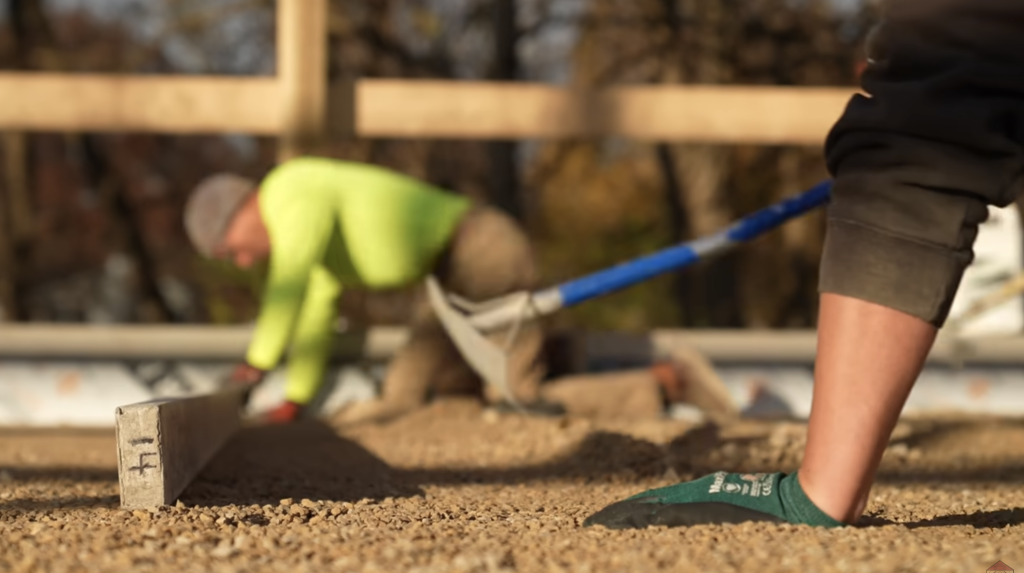
The Lightweight aluminum rail helped create a dead-flat base
A vibratory plate compactor locks the gravel base into place — the final step in creating a stable, uniform surface for Heat-Sheet® Heavy panels.
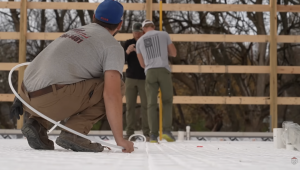
The nodules provided positive lock-in points for the upcoming PEX tubing, simplifying layout while protecting lines from shifting.
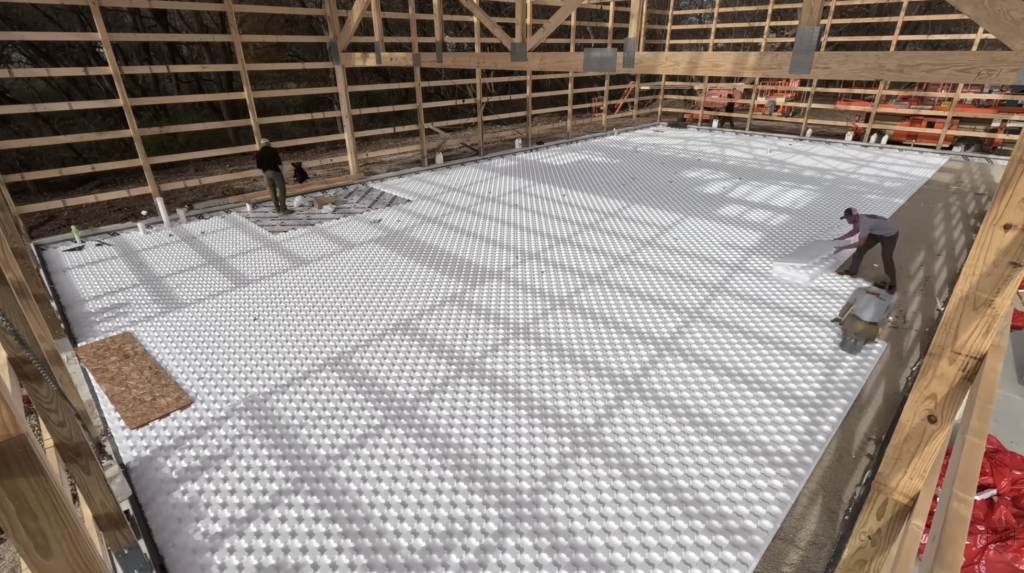
RR Builders start laying Heat-Sheet® Heavy panels — tight seams, fast coverage, and a rock-solid base for radiant tubing.
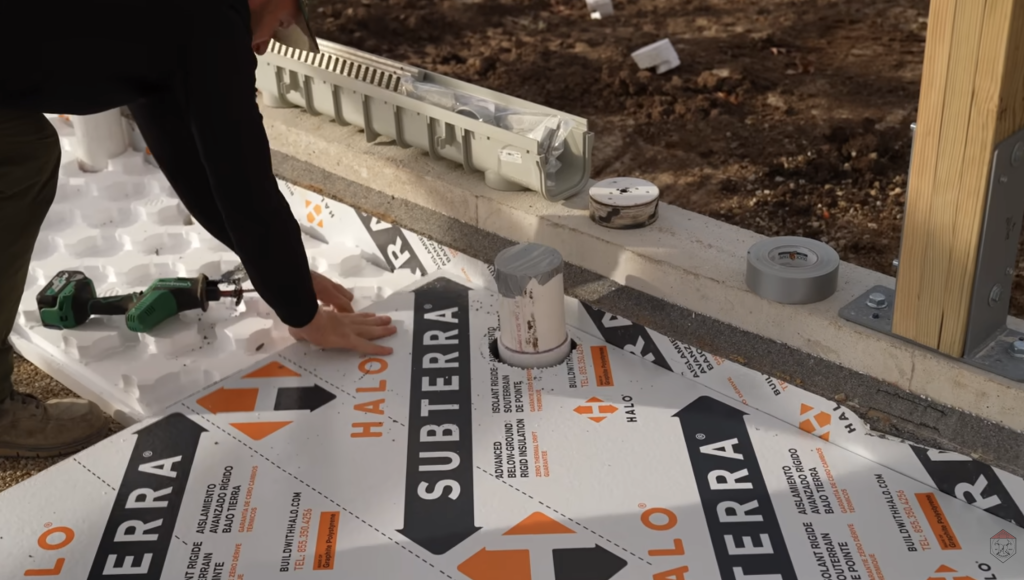
At the manifold wall, Halo® Subterra® Plus transitions created a flat, durable surface for routing and organizing the radiant tubing before it tied into the Heat-Sheet® Heavy field — a small but critical detail for a clean, efficient install. Unlike noduled panels, Subterra® Plus provides a smooth face that makes it easy to fan out, label, and staple the 32 supply and return lines with precision. Acting as both insulation and a layout platform, it bridges the transition between wall and slab seamlessly, keeping the manifold zone organized, the tubing protected, and the overall system performing at its best.
Halo® Subterra® Plus transitions at the manifold wall create a clean path for PEX tubing — a small but smart detail that keeps installs organized and efficient.
The Result
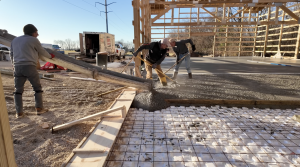
The finished base was flatter, faster, and stronger than traditional foam methods — the ideal platform for buggying in concrete on pour day.
The same qualities that made it perfect for this shop also make Heat-Sheet® Heavy ideal for garages and barns that demand durability, radiant performance, and long-term stability.
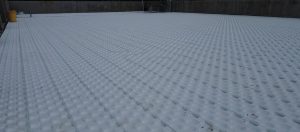
Heat-Sheet® panels nearly complete — flat, locked, and radiant-ready.
Wrapping It Up
Every radiant slab depends on what’s beneath it. With Heat-Sheet® Heavy, builders like RR Buildings get a system that installs cleanly, supports heavy use, and locks in radiant comfort — whether under a pickup, a workbench, or a tractor.
Don't miss a thing!
Subscribe for exclusive content, insider industry news and limited edition webcasts.
About the Builder
This project comes from RR Buildings, led by Kyle Stumpenhorst — known for elevating post-frame construction through precision, craftsmanship, and innovation. His Dream Shop build sets the benchmark for how modern shops, garages, and barns can combine strength with radiant-ready performance.
Every stage of this radiant slab install reflects Kyle’s builder mindset: do it right, or don’t do it at all. And Heat-Sheet® Heavy fits that philosophy perfectly.
For unlimited access to all of our technical and marketing resources, please enter your information. We will also email you a copy of each of the items you select for quick future reference.