At a Glance
Heat-Sheet Heavy is a dual-purpose solution — it provides both under-slab insulation and a radon-resistant barrier, helping commercial builders meet code with fewer layers.
Designed for commercial slab demands — engineered for thicker slabs, heavy loads, and complex building footprints common in schools, offices, healthcare, and retail projects.
Two installation pathways available — builders can choose between a polyethylene barrier or the Subterra™ Protection Board for increased radon resistance and durability.
Backed by detailed drawings and guides — Heat-Sheet offers commercial-specific radon detail packages with 3D visuals to simplify installation and ensure full code compliance.
Radon isn’t just a residential issue. Commercial spaces—schools, offices, daycares, and multi-family buildings—are equally vulnerable. Many jurisdictions now require radon mitigation in these settings, and Heat-Sheet® Heavy provides a dual-function solution: robust under-slab insulation that also serves as a radon migration barrier.
In this post, we break down how Heat-Sheet Heavy helps commercial builders meet radon control codes, improve performance, and simplify installation.
Why Commercial Projects Need Specialized Radon Solutions
Commercial slabs differ fundamentally from residential basements:
- They’re typically on-grade, not below-grade.
- Structural demands are higher—think thick slabs, pile caps, and grade beams.
- Building footprints are larger and often more complex.
To address these realities, Heat-Sheet developed a commercial-specific radon detail package. These drawings ensure radon continuity—even across the trickiest slab geometries.
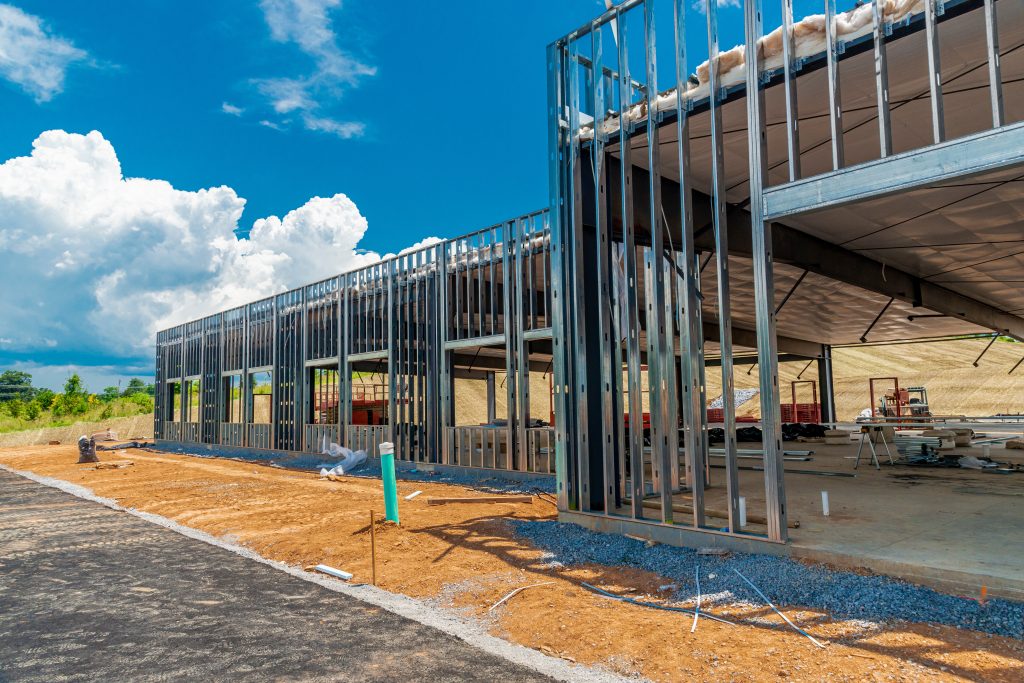
How Heat-Sheet Heavy Fits the Commercial Picture
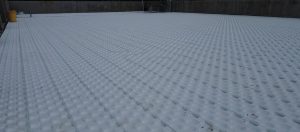
Heat-Sheet Heavy combines high-compression insulation with radon resistance in one interlocking panel system. When used with a polyethylene or Subterra® Protection Board air barrier, it creates a fully sealed radon layer under the slab.
Why it works for commercial jobs:
- Engineered for reinforced slabs and heavy loading
- Ideal for schools, healthcare, and retail spaces
- Provides both insulation and radon control in one layer
- Installs faster with less labor thanks to the interlocking design
Key Radon Detail Drawings for Commercial Builds
To address real-world conditions, Heat-Sheet’s commercial guide includes three core drawings—each available in two versions: one with poly, one with Subterra board.
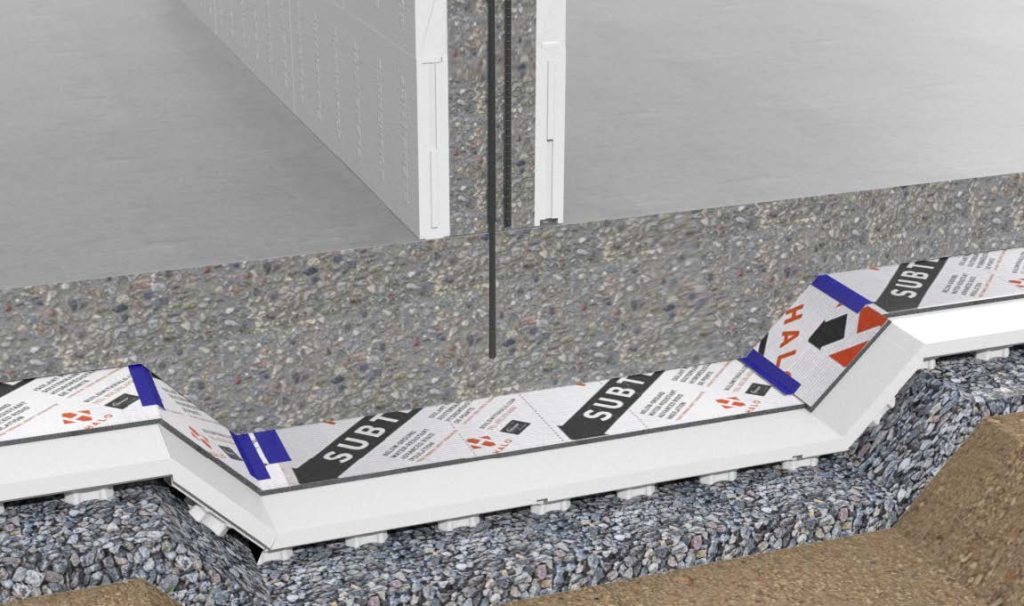
1.1 – Grade Beam Detail
- Continuous air/radon barrier under and around grade beams
- Common in plaza-style buildings with thickened edges
- Works with both compacted fill and undisturbed subgrades
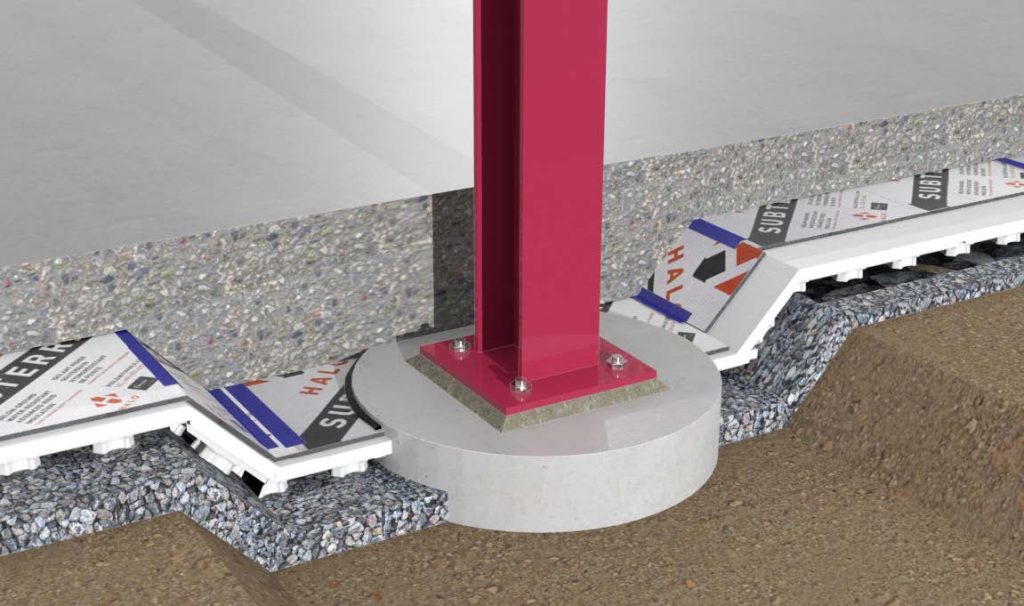
1.2 – Pile Column Detail
- Seals around pile caps and structural columns
- Radon continuity maintained through grout transitions
- Ideal for large-format stores or deep-foundation structures
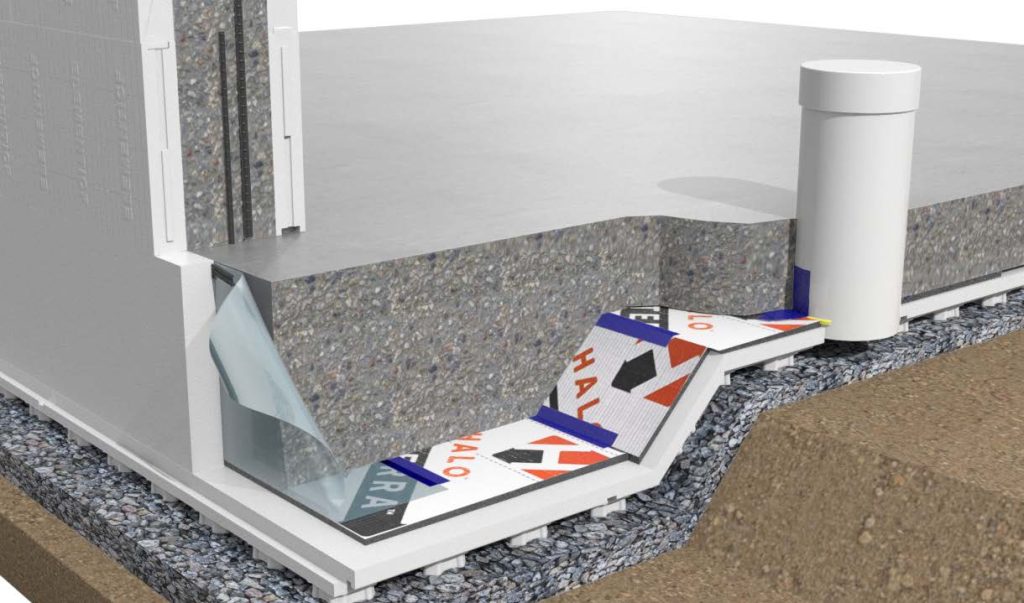
1.3 – Slab Edge Detail
- Protects the slab-to-wall transition zone
- Includes radon venting and foam protection
- Suited for strip malls and perimeter slab edges
Subterra Advantage:
Opting for the Subterra Protection Board increases radon resistance up to 7x over standard 6-mil poly—plus added toughness for jobsite durability.
Best Practices: Installation Options

Option 1: Polyethylene Barrier
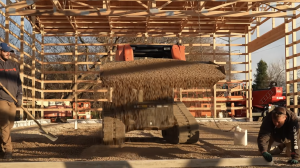
- Level and compact the base soil as required.
- Install Heat-Sheet Heavy panels “nodules down” directly over the compacted soil or gravel.
- Lay a 10-mil polyethylene sheet over the Heat-Sheet Heavy panels.
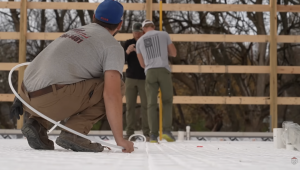
- Seal all seams and penetrations in the polyethylene sheet with low permeance sheathing tape, ensuring at least a 12” lap or as required by code.
- Install vent piping according to the radon mitigation design.
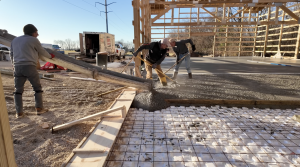
- Pour the concrete slab after inspecting and repairing damaged sections.
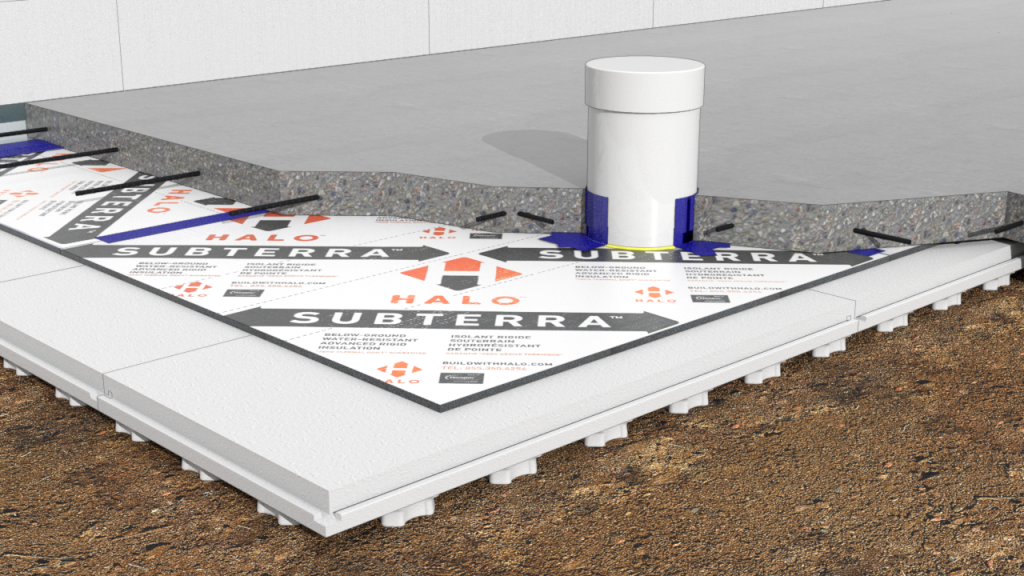
Option 2: Subterra Protection Board
Level and compact base soil as required
Install Heat-Sheet® Heavy panels “nodules down” over compacted base or gravel.
Place Subterra® Protection Board as the soil gas barrier over Heat-Sheet Heavy.
Seal all joints, seams, and penetrations with tape or flexible caulking.
Install a minimum 10-mil polyethylene membrane over Subterra Board, sealing laps and pipe penetrations.
Pour the concrete slab after inspecting and repairing damaged sections.
Pro Tip: Use the 3D visuals in our Radon Installation Guide to ensure every detail is dialed in.
Final Word: Confidence from the Ground Up
Commercial radon mitigation doesn’t have to be complicated. Heat-Sheet Heavy offers builders an integrated, code-compliant way to insulate slabs and control radon—without extra layers or added steps.
📩 Get project-specific support or request the full detail packet today.
Let’s build smarter, healthier buildings—starting at the slab.